


Views: 0 Author: Site Editor Publish Time: 2026-01-27 Origin: Site


Fiberglass moulds are crucial in industries like automotive, aerospace, and marine. These moulds are crafted from a blend of materials that enhance durability, strength, and performance. In this article, we will explore the different materials used in fiberglass moulds. You will learn how these materials combine to create robust and reliable moulds for high-performance applications.
Different types of resins, such as polyester, vinyl ester, and epoxy resins, play distinct roles in fiberglass moulding. Choosing the right resin is crucial for the mould’s strength, durability, and overall performance. The table below summarizes the characteristics and applications of these three types of resins.
| Resin Type | Properties | Applications | Technical Specifications | Considerations |
|---|---|---|---|---|
| Polyester Resin | Cost-effective, fast curing, general-purpose | Low to medium volume production, e.g., car bodies, bathtubs | Cure time: ~30-60 minutes; Shrinkage: High | Suitable for low-stress applications, not ideal for high-load environments. |
| Vinyl Ester Resin | Higher corrosion resistance, better heat resistance, lower shrinkage | Boat hulls, industrial parts, chemical storage tanks | Cure time: 30-60 minutes; Shrinkage: Low | More suitable for high-durability applications. |
| Epoxy Resin | Superior chemical resistance, minimal shrinkage, high strength | Aerospace, automotive, military high-performance moulds | Cure time: 60-120 minutes; Shrinkage: Very Low | High-performance applications, more expensive, requires precise curing control. |
Tip: When choosing resin, consider not only cost and curing time but also the specific application requirements such as heat resistance, strength, and shrinkage. Selecting the right resin ensures optimal performance and longevity of the mould.
Reinforcing materials in fiberglass moulds, such as fiberglass mat, woven roving, and advanced fibers like carbon fiber and Kevlar, add strength and stiffness. Fiberglass Mat provides tensile strength and is used to build thickness. Woven Roving offers directional strength to resist warping and cracking. Advanced Fibers, like carbon fiber and Kevlar, are stronger than fiberglass and are ideal for high-performance moulds exposed to extreme conditions, such as in aerospace and automotive industries, due to their lightweight and high-strength properties.
Catalysts and hardeners are used to activate the resin and ensure it cures properly. The most common catalyst used for polyester resins is Methyl Ethyl Ketone Peroxide (MEKP). It is mixed with the resin to start the chemical reaction that hardens the material.
Catalyst plays an essential role in determining the cure time of the resin. The amount used, combined with the ambient temperature and humidity, can affect how quickly the resin sets. For example, adding too much catalyst can lead to a rapid cure that might cause issues with the mould's final quality. The hardener ensures the resin reaches the necessary hardness and strength after it has cured, forming a durable and stable mould.
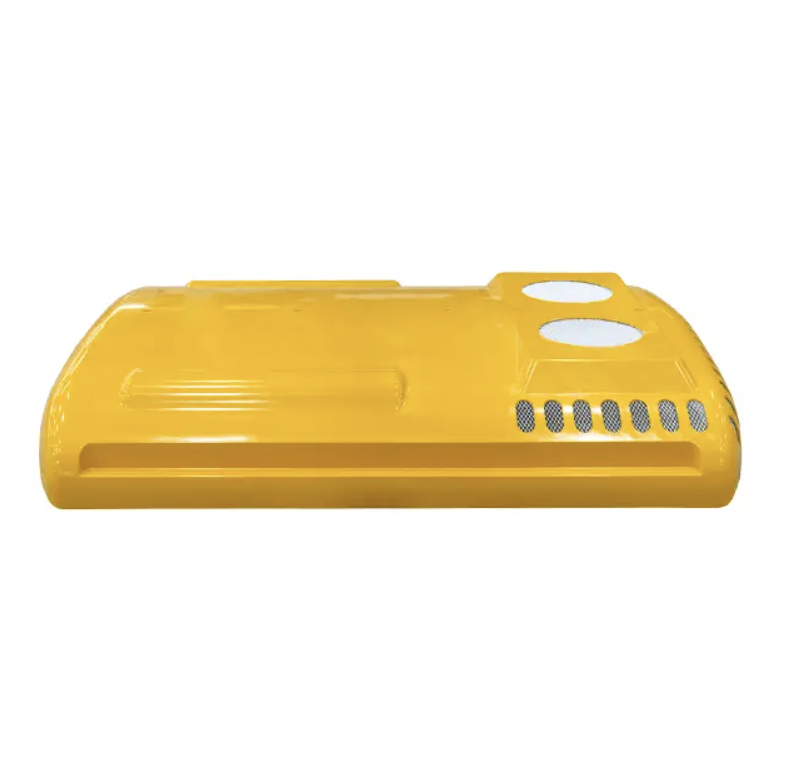
The first step in making a fiberglass mould is preparing the plug, which serves as the pattern or original model that the mould will replicate. The plug is often made from materials such as wood, foam, or clay, which are easy to shape and refine.
The plug must be smooth and free of defects, as any imperfections will transfer to the mould. After the plug is created, it is sealed with a special lacquer or resin to prevent it from absorbing any of the resin used to form the mould. A slight taper or flange is added around the edges of the plug, making it easier to remove the mould once it is formed.
After the plug is prepared, a gelcoat is applied to create a smooth, hard surface for the mould. Tooling gelcoat is typically used for this step, as it provides a durable, scratch-resistant surface. The gelcoat can be pigmented to provide a colored finish, making it easier to spot defects during the moulding process.
The gelcoat is applied in thin layers and allowed to cure before the next step. It is important to ensure that the gelcoat cures completely, as any tackiness could result in issues with the next layers of fiberglass. The gelcoat not only provides a smooth surface but also helps protect the mould from damage during the curing process.
Once the gelcoat has cured, layers of fiberglass mat or woven roving are applied to build up the strength of the mould. Each layer of reinforcement is saturated with resin, ensuring that all air pockets are eliminated and the material is fully impregnated with resin.
The resin is mixed with the appropriate hardener to initiate the curing process. Each layer is carefully applied, and once it sets, additional layers are added until the desired thickness is achieved. The thickness and number of layers depend on the intended use of the mould. Thicker moulds are required for parts that will experience high stresses or need to withstand heavy use.
Male Moulds, Female Moulds, and Hybrid Moulds each serve distinct purposes in mould manufacturing. Male moulds are formed around an external plug, ideal for simple parts with smooth interiors. Female moulds form the part inside, perfect for complex shapes with smooth exteriors. Hybrid moulds combine both types, offering precision and high-quality finishes on both sides.
| Mould Type | Structure | Moulding Process | Surface Finish | Common Applications | Advantages | Ideal For |
|---|---|---|---|---|---|---|
| Male Mould (Positive Mould) | Mould is formed around the plug (external surface) | Part is moulded over the outside of the plug | Smooth surface on the interior of the part | Bathtubs, shower trays, simple automotive parts | Quick and cost-effective for simple shapes | Parts with smooth inner surfaces, low complexity |
| Female Mould (Cavity Mould) | Part is formed inside the mould (internal surface) | Part is moulded inside the cavity of the mould | Smooth exterior surface on the final part | Car body panels, boat hulls, aerospace components | Superior external surface finish, ideal for complex shapes | Complex shapes needing high-quality outer surfaces |
| Hybrid Mould | Combines features of both male and female moulds | Combines both interior and exterior moulding methods | High-quality finishes on both interior and exterior | Aerospace, automotive, high-precision moulding | Best of both worlds, precision and high-quality finishes | Complex parts with intricate features and high standards |
Tip: Hybrid moulds offer the best of both worlds, making them ideal for industries where parts require precision and high-quality finishes on both interior and exterior surfaces, especially in high-performance sectors like aerospace and automotive.
Tooling gelcoat is a crucial step in ensuring the durability and aesthetic quality of a mould’s surface. It creates a hard, scratch-resistant finish that can endure multiple production cycles. The gelcoat also acts as a protective layer, preventing damage during handling, and minimizing defects in the final part by ensuring a smooth, even surface. The formulation of the gelcoat should be chosen based on the specific requirements for strength, temperature resistance, and chemical exposure.
Release agents are vital for efficient moulding, especially for complex geometries. Wax, PVA, and silicone-based agents are commonly used, each offering specific benefits such as improved release time and smoother surface finishes. These agents prevent resin adhesion, allowing for easy demoulding without damaging the moulded part. Proper application and selection are essential, as the wrong type can result in moulding defects or difficulty during part removal, compromising the production cycle.
After mould removal, polishing ensures a flawless final surface by smoothing out imperfections and providing a mirror-like finish. Wet sanding with progressively finer grits helps eliminate scratches, while polishing compounds enhance gloss and clarity. This process is critical for achieving parts that meet high visual standards and functional specifications, especially in industries like aerospace and automotive, where surface imperfections can affect performance and aesthetics. The final finish must also be evaluated for consistency across large production runs.
Maintaining a stable temperature between 18-22°C and controlling humidity levels during the mould-making process is vital for ensuring consistent curing. Temperature fluctuations can cause uneven resin curing, leading to defects such as warping or incomplete solidification. High humidity can slow down the curing process, leading to prolonged production times, while low humidity can cause the resin to cure too quickly, resulting in cracks or weakened bonds. Precise environmental control ensures high-quality, defect-free moulds, improving the overall production efficiency and the durability of the final product.
Fiberglass moulding involves working with hazardous chemicals like resins, catalysts, and solvents that can emit toxic fumes and particles. Proper use of Personal Protective Equipment (PPE), such as respirators, gloves, and goggles, is essential to prevent exposure to harmful substances. Respirators equipped with appropriate filters should be worn to protect against fumes and airborne particles. Additionally, ensuring adequate ventilation, including the use of exhaust systems, helps to remove fumes from the workspace, preventing respiratory issues and ensuring a safe working environment for all personnel involved in the moulding process.
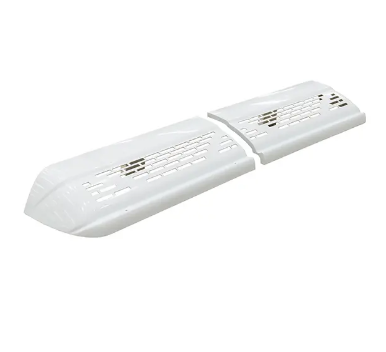
Carbon fiber and Kevlar® are advanced materials used in moulding when parts need to endure extreme conditions, such as high temperatures or intense mechanical stresses. These fibers provide an excellent strength-to-weight ratio, making them highly suitable for aerospace, automotive, and military applications. Carbon fiber offers rigidity and durability, while Kevlar® adds toughness and impact resistance. Their use in moulds significantly improves part performance without adding unnecessary weight, essential in applications where every gram counts, such as aircraft structures or high-performance automotive components.
Epoxy resins are renowned for their superior durability, chemical resistance, and minimal shrinkage. These characteristics make epoxy the preferred choice for high-performance moulds exposed to challenging conditions, like high temperatures or corrosive environments. Compared to polyester and vinyl ester resins, epoxy resins offer a higher tensile strength and greater resistance to chemicals, making them ideal for aerospace and automotive components, as well as industrial applications where long-term durability and structural integrity are critical. They are also well-suited for applications requiring high precision and minimal expansion during curing.
High-temperature resins, such as vinyl ester and epoxy, are specifically formulated to maintain their mechanical and chemical properties under elevated temperatures. These resins are essential for moulds used in industries where parts must endure harsh environments, such as the automotive, aerospace, and power generation sectors. High-temperature resins offer enhanced thermal stability, reducing the risk of warping or degradation over time. By maintaining their structural integrity at temperatures exceeding 120°C, they ensure that the moulds continue to perform efficiently even in extreme operating conditions, ensuring both longevity and reliability.
Fiberglass moulds play a critical role in creating durable and high-performance parts across various industries, including automotive, aerospace, and marine. The materials used—resins, reinforcements, and additives—significantly impact the mould's strength and functionality. Changshu Jianan FRP Products Co., Ltd. offers superior fiberglass moulds with exceptional durability and precision, ensuring long-lasting and high-quality results. By selecting the appropriate materials and employing a meticulous mould-making process, the company guarantees optimal performance and consistent product quality.
A: Fiberglass moulds are made from various materials, including resins such as polyester, vinyl ester, and epoxy. These resins act as binders for reinforcement materials like fiberglass mat, woven roving, and advanced fibers such as carbon fiber and Kevlar®.
A: Epoxy resin is used in fiberglass moulds because of its superior strength, chemical resistance, and minimal shrinkage. It's ideal for high-performance moulds exposed to extreme conditions, such as those used in aerospace or automotive industries.
A: Fiberglass mat provides tensile strength and is used to build up the thickness of a fiberglass mould. It's easy to apply, saturate with resin, and offers a strong foundation for creating durable moulds.
A: Carbon fiber provides exceptional strength and stiffness, making it ideal for high-performance applications. It's lightweight yet strong, commonly used in industries like aerospace and automotive, where parts need to endure extreme conditions.
A: Temperature and humidity control is essential for ensuring the resin cures evenly. Fluctuations can cause defects in the mould, affecting the final product's quality. Maintaining stable conditions ensures a smooth, durable finish on the fiberglass mould.
A: Yes, working with fiberglass moulds involves chemicals and materials that can be hazardous. Using proper Personal Protective Equipment (PPE) like respirators, gloves, and eye protection, along with proper ventilation, is crucial to ensure safety during the mould-making process.
