


Views: 0 Author: Site Editor Publish Time: 2026-10-22 Origin: Site


Equipment downtime and damaged cargo directly hit your bottom line. For fleet operators and last-mile logistics providers, the structural integrity of a delivery container relies entirely on its weakest maintenance point. Fiberglass offers exceptional durability and weather resistance for daily route operations. However, neglected maintenance causes severe cascading failures. Gelcoat oxidation weakens the exterior shell. Failed seals compromise weatherproofing. Hardware fatigue leads to sudden mechanical breakdowns during transit. These failures result in water ingress, compromised cargo security, and premature equipment replacement. Establishing a standardized maintenance protocol solves these operational problems. You must focus on surface cleaning, lid seal integrity, and hardware checks. This proactive approach drastically reduces lifecycle expenses. This guide outlines essential technical maintenance requirements. These protocols will inform your ongoing fleet management strategy and provide baseline criteria for initial procurement decisions.
Cost Reduction: Routine maintenance of fiberglass surfaces prevents UV degradation and structural micro-cracking, extending the operational lifespan of fleet assets.
Seal Integrity is Critical: Over 80% of water ingress issues stem from neglected lid seals and dirty sealing ridges; routine cleaning and lubrication of weatherstripping are non-negotiable for cargo protection.
Hardware Fatigue Mitigation: Regular torque checks, finish inspections, and lubrication of marine-grade hinges and latches prevent mechanical failures during high-frequency delivery routes.
Procurement Alignment: Understanding maintenance overhead is a critical factor in delivery box selection, highlighting the value of vendors that offer accessible replacement parts and robust after-sales support.
Defining success criteria is the first step in fleet management. Zero water ingress over a decade of use defines a successful deployment. Minimal daily maintenance overhead keeps your operations efficient. Fleet managers need reliable assets that withstand harsh urban environments. A well-maintained container protects sensitive cargo from extreme weather conditions, road debris, and daily physical impacts.
You must evaluate material durability against daily maintenance overhead. Fiberglass offers a superior strength-to-weight ratio compared to plastic or metal. Plastic warps under extreme summer heat and becomes brittle in freezing temperatures. Metal dents easily when drivers back into loading docks and rusts immediately when the paint scratches. Fiberglass resists physical impact, maintains its rigid shape under thermal stress, and will never rust. However, fiberglass requires specific preventative care. You must protect the gelcoat from UV rays to prevent surface chalking. Neglecting this step leads to micro-cracking, exposing the underlying glass fibers to moisture.
Maintenance realities must directly influence your delivery box selection. Buyers must evaluate component accessibility before signing purchase orders. Does the box use standard marine-grade hardware? Can your mechanics easily replace the weatherstripping without specialized tools? You must answer these questions before committing to a fleet-wide purchase. Selecting a modular design simplifies future repairs and reduces long-term operational expenses. If a driver damages a single panel, you want the ability to patch or replace that specific section rather than scrapping the entire unit.
Material Type | Durability Profile | Thermal Expansion | Maintenance Requirement | Common Failure Point |
|---|---|---|---|---|
Fiberglass | High (Excellent strength-to-weight) | Minimal (Retains shape) | Bi-annual waxing, seal lubrication | Gelcoat oxidation (if neglected) |
Molded Plastic | Medium (Prone to heat warping) | High (Warps in summer heat) | Basic washing, UV spray | UV brittleness, structural sagging |
Aluminum | High (Heavy weight penalty) | Moderate | Dent repair, galvanic isolation | Corrosion at steel mounting points |
Steel | Very High (Extremely heavy) | Low | Constant rust prevention | Rust penetration at weld seams |
Implementing a strict washing schedule extends the life of any fiberglass delivery box. Use mild, non-abrasive detergents for weekly cleaning routines. A dedicated marine-grade fiberglass wash works best. Avoid heavy degreasers or standard dish soap. Dish soap contains high pH levels that strip away protective wax coatings, leaving the gelcoat exposed to the elements. Harsh solvents and ammonia cause severe chemical damage to the resin. Abrasive scouring pads scratch the gelcoat instantly, creating microscopic grooves that trap dirt and accelerate degradation.
Follow this standardized washing procedure for fleet operations:
Pre-rinse the entire container with a low-pressure hose to remove loose grit, sand, and heavy road salt.
Mix the marine wash with warm water in a clean bucket using the manufacturer's recommended dilution ratio.
Apply the soapy water using a soft microfiber wash mitt, starting from the top lid and working downward to prevent dirty water from streaking over clean sections.
Scrub high-impact areas, such as the front face, gently to remove baked-on bug splatter and exhaust soot.
Rinse the surface thoroughly with clean water until no soap bubbles remain. Leftover residue bakes in the sun and dulls the finish.
Dry the box manually using clean microfiber towels or a synthetic chamois to prevent hard water spots from etching into the gelcoat.
UV degradation breaks down fiberglass structures over time. The sun causes oxidation, which appears as a dull, chalky white residue on the surface. The gelcoat eventually loses its protective waterproof properties, becoming porous. You must implement a dedicated surface preparation stage before applying wax. Remove heavy oxidation, road tar, and exhaust stains safely using a specialized liquid fiberglass rubbing compound. Work the compound into the surface using a dual-action (DA) polisher on a low speed setting.
Once the surface is smooth and free of oxidation, apply a marine-grade fiberglass wax or a synthetic polymer sealant. Polymer sealants bond chemically with the gelcoat, offering superior longevity compared to traditional carnauba wax. Apply these protectants using a foam finishing pad on your DA polisher for even coverage. Buff off the excess haze with a clean microfiber towel. Wax the boxes bi-annually to maintain optimal protection. Adjust this timeline to every three months if your fleet operates in high-UV desert environments or coastal areas with heavy salt spray.
Interior compartments require strict hygiene and sanitation protocols. Food delivery spills, leaking beverage cups, and chemical container breaches happen frequently during transit. Clean these spills immediately. Sugary liquids seep into the corners and harden, creating permanent sticky residues. Use food-safe, non-corrosive enzyme cleaners for the interior walls. Enzyme cleaners break down organic matter without damaging the fiberglass resin.
Proper ventilation prevents mold growth inside the sealed environment. Instruct drivers to leave the lids propped open overnight inside secure parking facilities to allow the interior to air out. Implement non-toxic pest deterrents around your parking facility. Lingering food odors attract ants, roaches, and rodents quickly. These pests often invade during overnight vehicle storage, chewing through rubber weatherstripping to access the interior. Keep the interior spotless to eliminate this contamination risk.
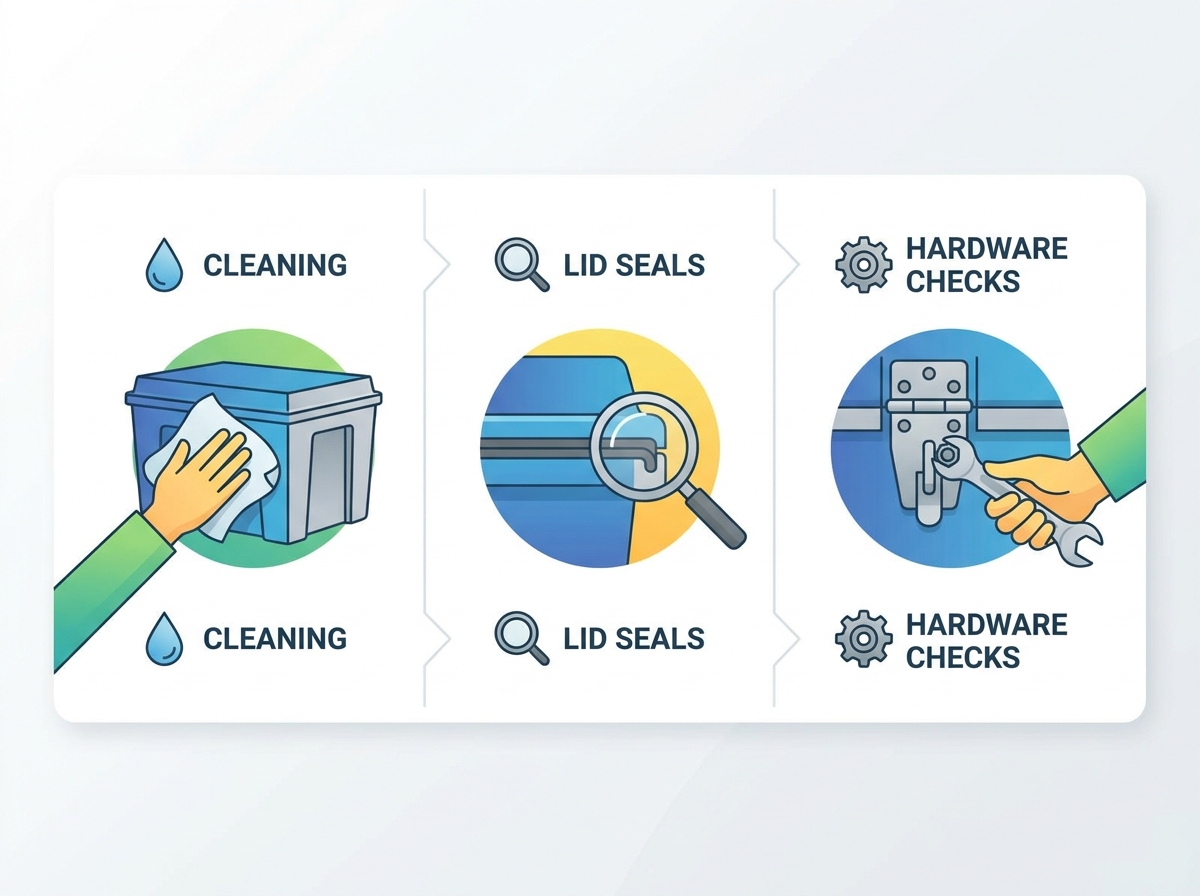
Visually inspect the rubber lid seal every single week. Look closely for tears, flattening, or signs of dry rot. Rubber experiences "compression set" over time, meaning it loses its physical memory and stays permanently flattened. When this happens, the seal no longer pushes back against the lid, creating microscopic gaps for water to enter. The fiberglass sealing ridge requires equal attention during inspections. This is the raised lip where the rubber seal rests. Ensure the ridge remains clean and structurally undamaged. Clear away any dirt, dried leaves, or debris breaking the seal.
Perform a paper test to verify uniform compression across the entire lid. Open the container, place a standard piece of printer paper across the rubber seal, and close the lid tightly. Pull the paper out slowly to check the grip. You should feel noticeable, heavy resistance as you pull. If the paper slides out easily, the seal lacks adequate compression in that specific spot. Repeat this test around the entire perimeter of the lid. Pay special attention to the corner seal pads. Leaks most frequently originate in these high-stress corners where the rubber bends.
Dirt and grit act as harsh abrasives against rubber. They grind away the soft material during daily transit vibrations, acting like sandpaper between the lid and the base. Wipe down all seals and ridges with a damp cloth during the weekly wash. Remove all visible dust before applying any chemical treatments.
Apply a silicone-based seal lubricant or dielectric grease to the rubber. These products keep the EPDM or silicone rubber supple, flexible, and hydrated. This prevents freezing and sticking in harsh cold climates, which can cause drivers to rip the seal out when forcing a frozen lid open. Strictly avoid using any petroleum-based lubricants like standard WD-40 or motor oil. Petroleum degrades rubber rapidly, causing it to swell, turn mushy, and eventually disintegrate. Apply the silicone spray to a clean rag first, then wipe it onto the seal to prevent overspray onto the fiberglass gelcoat.
Establish clear criteria for mandatory seal replacement. Permanent deformation means the seal is completely compromised. Deep cracking indicates severe dry rot has set in. Replace the seal immediately when you spot these issues. Delaying replacement carries significant operational risk for your fleet. Water ingress leads directly to expensive cargo damage liability, especially when transporting electronics or paper goods.
Follow these steps for proper seal replacement:
Peel the old weatherstripping away from the fiberglass channel.
Use a plastic scraper and a mild adhesive remover to clear away all old glue and foam residue. The channel must be perfectly bare.
Wipe the channel down with isopropyl alcohol to remove any remaining oils or adhesive remover.
Apply the new OEM weatherstripping, pressing firmly along the adhesive backing. Do not stretch the rubber as you apply it; stretching causes it to shrink back and pull away from the corners later.
Allow the adhesive to cure for 24 hours before putting the box back into active route service.
Check for hinge sag regularly during routine vehicle maintenance. Sagging causes uneven seal compression across the lid. It also leads to severe latch misalignment over time, forcing drivers to slam the lid to get it to catch. Ensure all hinges remain perfectly straight and tightly secured. Inspect the hinge finish for early signs of rust. Corrosion bleeds onto the gelcoat and causes permanent orange stains. This indicates failing protective coatings on the metal hardware.
Inspect the fiberglass mounting points around the hinges carefully. Look for stress fractures or spider cracking in the gelcoat. Address these micro-cracks before they expand into structural failures. If the fiberglass around the hinge flexes when you open the lid, the internal backing plate has likely failed or the core material has rotted.
Clean out grit from lock cylinders frequently. Dirt jams the internal latch mechanisms, seizes the tumblers, and prevents secure locking. Use dry graphite powder or PTFE-based dry lubricants for all locks and latch pivot points. These dry lubricants prevent dust accumulation inside the cylinder. Wet oils attract dirt, creating a thick grinding paste that destroys the internal metal components.
Verify the latch engages smoothly every time you close it. You should not need excessive force to secure the lid. Forcing the latch indicates box warping, hinge sag, or internal hardware failure. Replace worn latch catches before they fail during a delivery. A broken latch at the start of a route means the driver must return to the depot, wasting fuel and delaying all subsequent deliveries.
Check all mounting bolts and nuts routinely. Constant road vibration causes anchoring hardware to back out over time. Verify the hardware securing the box to the vehicle chassis or motorcycle rack. Use a calibrated torque wrench to ensure proper factory specifications. Do not over-tighten bolts through fiberglass, as excessive torque crushes the internal core material and cracks the gelcoat. Use nylon-insert lock nuts or a medium-strength threadlocker compound to prevent vibration loosening.
Inspect the caulk or silicone sealant around floor mounting holes. Ensure water cannot splash up into the box from the road surface during heavy rainstorms. Verify all replacement hardware is marine-grade stainless steel. Use type 316 stainless steel exclusively for repairs, as its molybdenum content provides superior resistance to road salts and chlorides. This prevents galvanic corrosion between dissimilar metals on the vehicle chassis.
Fleet managers must distinguish between cosmetic and structural issues. Cosmetic gelcoat crazing appears as shallow spider cracks radiating from a central point, usually caused by a minor impact or over-tightened hardware. These do not penetrate the underlying fiberglass mat. They look unsightly but do not compromise weatherproofing immediately. Deep structural delamination feels soft or spongy to the touch. Delamination compromises the physical integrity of the container entirely, meaning the layers of glass fiber and resin have separated.
Train your maintenance staff to recognize this difference accurately using the tap test. Take the plastic handle of a screwdriver and tap lightly around the suspected area. Solid fiberglass produces a sharp, crisp clicking sound. Delaminated fiberglass produces a dull, hollow thud. Press firmly on the cracked area to test for flex. Excessive flexing indicates the internal structural integrity is gone.
Evaluate the cost-benefit of patching minor surface gouges. Epoxy patch kits repair shallow fiberglass damage highly effectively. The repair process involves grinding out the damaged area, applying a two-part marine epoxy, sanding it flush, and polishing it to match the surrounding gelcoat. This keeps the box in service for minimal cost.
Retiring a severely compromised box is sometimes the safest option. Extensive delamination, large puncture holes, or shattered corners warrant immediate replacement to protect your drivers and cargo. Modular box designs impact this evaluation dimension heavily. You can often unbolt and replace a single damaged side panel instead of scrapping the entire unit. This modularity saves significant capital during fleet lifecycle management.
Adhering to documented maintenance protocols is absolutely mandatory. It ensures full compliance with manufacturer warranties. Document every cleaning session, hardware inspection, and torque check carefully. Maintain a digital logbook for each delivery container in your fleet, tracking its maintenance history alongside the vehicle it is mounted to. Utilize Jianan after-sales support when complex problems arise. Their technical team assists in diagnosing complex structural issues based on photos and descriptions. They also provide guidance on unexpected hardware failures. Consulting the manufacturer prevents improper repairs that void warranty coverage.
Always use Original Equipment Manufacturer parts for repairs. OEM lid seals guarantee exact fitment, proper corner radiuses, and the correct rubber density for optimal compression. OEM hinges and latches maintain original weatherproofing standards and align perfectly with factory pre-drilled holes. Aftermarket parts often fail prematurely, require custom drilling that weakens the fiberglass, and cause secondary damage. Reliable vendor support streamlines fleet maintenance operations significantly. It reduces administrative overhead for your procurement teams. Keep a stock of essential replacement parts on hand locally in your maintenance bay. This minimizes vehicle downtime when a component inevitably breaks during a shift.
Take these immediate actions to protect your fleet assets:
Audit all current delivery boxes for seal integrity, performing the paper compression test on every unit.
Check the torque on all mounting fasteners and hinges using a calibrated torque wrench to prevent vibration damage.
Establish a bi-annual deep cleaning, compounding, and waxing schedule for all fiberglass units to halt gelcoat oxidation.
Stock your maintenance bay with essential OEM replacement seals, 316 stainless steel hardware, and dry PTFE lubricants.
Train delivery personnel to report latch binding, hinge sag, or visible seal damage at the end of every shift.
A: Wash the exterior weekly using a dedicated marine-grade soap to remove road grime and bug splatter. Apply a high-quality polymer wax or UV protectant every four to six months. Vehicles operating in high-UV environments or coastal areas require waxing every three months to prevent gelcoat oxidation.
A: Use a mild, non-abrasive marine-grade fiberglass wash. Avoid harsh chemical degreasers, bleach, ammonia, or abrasive sponges. These aggressive products scratch the gelcoat, strip away protective wax layers, and dull the exterior finish rapidly.
A: Replace the lid seal if you notice visible cracks, dry rot, permanent flattening, or if water begins leaking into the box during rain. Always check the corner seal pads first, as they bear the most physical stress and fail earliest.
A: Use a silicone-based lubricant or dielectric grease for rubber lid seals to keep them hydrated and supple. For metal hinges and lock cylinders, use a dry PTFE or graphite powder lubricant to prevent dust and dirt buildup.
A: You can use a pressure washer on a low setting with a wide-angle nozzle for the main body panels. Keep the high-pressure spray away from lid seals, hinges, and latches. High pressure forces water past weatherstripping and strips away protective wax.
A: Delivery box selection requires evaluating maintenance overhead. Buyers should look for boxes built with marine-grade stainless steel hardware, easily replaceable OEM weatherstripping, and strong after-sales support to minimize long-term operational expenses and reduce vehicle downtime.
