


Views: 0 Author: Site Editor Publish Time: 2026-10-02 Origin: Site


Selecting the correct wall thickness for industrial enclosures is a critical engineering challenge. You must balance structural integrity against raw material costs and overall weight. If you specify walls too thin, you risk enclosure deflection. Environmental seal failure and catastrophic impact damage often follow. Conversely, over-specifying your panels inflates project budgets. It extends production lead times. It also significantly complicates on-site installation. Technical buyers and engineers need an evidence-based framework for these decisions. This guide will help you evaluate specific application demands effectively. You will learn how dynamic loading, industry compliance, and manufacturing tolerances dictate your structural choices. We will explore how to specify the optimal FRP box wall thickness for your next demanding project.
Engineers categorize fiberglass enclosures based on their intended physical demands. These baseline categories simplify initial design decisions. They provide a reliable starting point before you calculate specific dynamic loads.
Light-duty fiberglass shells measure approximately 1/8 inch or 3 millimeters thick. They excel in highly controlled environments. Small junction boxes commonly use this specification. Lightweight sensor housings and indoor electronics protection also benefit from thinner profiles. However, these thin walls carry distinct limitations. They remain vulnerable to high-velocity impacts. A dropped wrench or a small vehicle bump can cause fatal cracking. Furthermore, these enclosures offer limited internal mounting capacity. You cannot mount heavy internal components directly to the walls. You must use separate backing plates or internal frames to support additional weight.
Medium-duty specifications step up to 3/16 inch or 5 millimeters. This represents the industry standard for most rugged applications. Standard industrial control panels typically utilize this thickness. Outdoor telecom nodes rely on 5mm walls to endure varied weather. Standard NEMA 4X enclosures almost universally start at this baseline. This thickness balances robust impact resistance against manageable unit weight. Panels at 5mm can easily accommodate standard threaded inserts. You can mount moderately heavy backplanes directly into the fiberglass. It provides excellent structural rigidity for mid-sized footprints.
Heavy-duty specifications begin at 1/4 inch or 6 millimeters. Large-span battery enclosures demand this level of structural rigidity. Heavy pump or valve housings also require thick walls to contain internal pressures. Extreme wind or snow load zones dictate thicker panels to prevent roof collapse. Specifying 6mm panels introduces new considerations. Thicker cross-sections require longer curing times during manufacturing. This significantly increases unit weight. It also raises the total manufacturing cost due to higher resin and glass volumes.
Table: Standard Thickness Categories for Fiberglass Enclosures
| Category | Thickness (in / mm) | Typical Applications | Primary Limitations |
|---|---|---|---|
| Light-Duty | 1/8" (3mm) | Small junction boxes, indoor sensors | Low impact resistance, requires backing plates |
| Medium-Duty | 3/16" (5mm) | Telecom nodes, NEMA 4X control panels | Cost increases for very large spans |
| Heavy-Duty | 1/4"+ (6mm+) | Battery enclosures, heavy pump housings | High weight, longer manufacturing lead times |
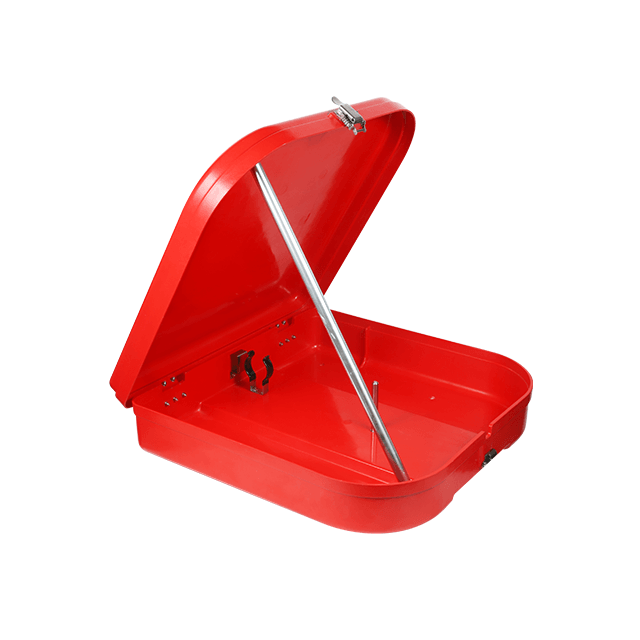
Standard baselines only offer a starting point. Real-world applications demand precise engineering calculations. You must evaluate several dynamic variables before finalizing your panel dimensions.
Evaluate the exact weight of components mounted inside the enclosure. This includes items bolted directly to the walls. It also includes displays or heavy latches mounted to the door of an FRP equipment box. Heavy internal drives cause immense localized stress. Large battery banks create sheer forces on vertical panels. Standard thin walls will fail under these point loads. You must specify localized thickness increases. Alternatively, you can design molded-in mounting struts. These structures distribute weight across a larger surface area. They prevent hardware tear-out during seismic events or transportation.
Static weight is only half the equation. Dynamic external forces constantly attack outdoor enclosures.
Always assess the operating temperature range. Fiberglass composites react to extreme climates. Extreme cold increases material brittleness. Thin walls might shatter upon impact at sub-zero temperatures. Conversely, high heat softens the resin matrix slightly. This can exacerbate panel deflection in thinner walls. Wide temperature swings cause repeated expansion and contraction cycles. Thicker panels resist these thermal fatigue cycles more effectively over decades of service.
Engineering a robust enclosure is essential. However, ignoring manufacturing economics leads to unviable products. You must balance pure strength against practical production limits.
Many engineers default to thicker walls to solve structural doubts. This creates an over-engineering trap. Doubling the wall thickness literally doubles your raw material cost. It also extends manufacturing lead times drastically. Thick fiberglass requires multi-pass layups. Operators must let each layer cure slightly before adding more. Large resin volumes generate exothermic heat during curing. Thick walls face longer thermal curing limits to prevent internal cracking. You must specify only what the application truly demands.
You can achieve high rigidity without severe cost penalties. Smart design outperforms sheer mass. Detail how you can specify strategic internal ribs. Engineers integrate structural corrugations into large flat panels. You can also specify core-mat integrations. Manufacturers encapsulate synthetic honeycombs or balsa wood between fiberglass skins. This creates a highly rigid sandwich panel. It prevents flexing while keeping the total weight exceptionally low. This strategy is far superior to universally thickening the entire enclosure shell.
You must factor shipping and handling into your design economics. Heavier boxes cost significantly more to transport. Freight carriers charge by dimensional weight and sheer mass. Thicker walls add hundreds of pounds to large enclosures. Installation labor also scales alongside unit weight. A heavy-duty box might require a mechanical crane. A medium-duty box might only need a two-person manual lift team. You must evaluate these deployment factors when choosing a thicker specification. Consulting a specialist about FRP box wall thickness often reveals ways to trim unnecessary weight without sacrificing performance.
Your enclosure must pass strict third-party certifications. Regulatory bodies do not care about your material preferences. They only care about standardized test results.
Wall deflection directly impacts ingress protection. NEMA and IP ratings rely on continuous gasket compression. If an FRP wall is too thin, dynamic wind loads will warp the frame. This slight bending pulls the door away from the cabinet body. It breaks the polyurethane gasket seal. Water and dust will immediately penetrate the enclosure. You will fail NEMA 4X or IP66 requirements. Wall thickness must be calculated to keep frame deflection near zero under maximum expected loads.
Commercial compliance requires meeting specific testing standards. These thresholds dictate your minimum design parameters.
Many critical infrastructure projects require specific fire ratings. Achieving a Class A flame spread rating requires specialized chemistry. Manufacturers add alumina trihydrate (ATH) or brominated compounds to the resin. These fire-retardant additives alter the structural matrix. They slightly reduce the overall flexural strength of the composite. It changes the strength-to-thickness ratio compared to standard orthophthalic resins. You often need marginally thicker walls to achieve the same mechanical strength when using heavily filled fire-retardant resins.
Even brilliant designs fail due to poor manufacturing foresight. Avoid these common implementation errors when writing your specifications.
Outdoor environments ruthlessly degrade plastics. Ultraviolet radiation attacks raw resin systems. It causes "fiber bloom," where internal glass strands become exposed. You must specify a protective gel coat layer. Alternatively, demand a robust UV-inhibitor additive package. Recognize that weathering causes marginal surface loss over a 20-year lifecycle. Therefore, you must calculate your required structural thickness beneath this protective layer. The outermost millimeter is sacrificial. It does not contribute to long-term load-bearing calculations.
Fiberglass manufacturing is rarely perfectly uniform. Hand-layup and spray-up processes carry inherent human variables. Tolerance variations typically range between ±10-15% of your specified thickness. A 5mm target might actually measure 4.5mm in some spots. Do not design mechanical fits expecting machine-shop precision on raw fiberglass surfaces. Identify critical dimensional areas on your drawings. You must instruct the manufacturer to machine these specific zones flat. Alternatively, they must use specialized closed-mold techniques for those specific mating surfaces.
Structural stress concentrates heavily at sharp corners. A 90-degree internal angle is a guaranteed failure point under dynamic load. Increasing overall wall thickness is a terrible way to fix this. It is highly ineffective against localized corner stress. Instead, properly specify rounded corners. You must dictate generous internal radii on your CAD models. Require manufacturers to add woven roving strips along cabinet edges. This reinforced edging prevents structural cracking far better than just pouring more resin into a mold.
Specifying composite panel dimensions requires rigorous analysis rather than guesswork. You must evaluate the application environment meticulously. Wind loads, internal equipment weight, and thermal cycles dictate your structural needs. Compliance standards like UL and NEMA further constrain your minimum allowable parameters. You must balance these requirements against manufacturing costs and final installation weights.
Your next step should be proactive collaboration. Engage with a reputable fiberglass manufacturer early in your design phase. Utilize Finite Element Analysis (FEA) software to simulate environmental stresses on your specific geometry. This partnership allows you to finalize a specification that balances extreme performance with practical manufacturability. You will eliminate costly over-engineering while guaranteeing long-term field reliability.
A: Generally, specify a 3/16" (5mm) minimum for outdoor applications. This thickness accounts for wind loads, structural rigidity, and UV exposure over a long lifecycle. Very small footprint boxes can survive at 1/8" (3mm) if they feature proper UV-resistant gel coats and lack heavy internal loads.
A: It only helps up to the point that it prevents frame deflection under dynamic load. Once the cabinet stops bending, extra thickness adds zero sealing value. Beyond that structural baseline, the gasket quality and latching mechanism determine the NEMA 4X seal integrity.
A: Yes. Advanced manufacturers can easily build variable thicknesses. They add extra layers of chopped strand mat (CSM) or woven roving to specific high-stress areas. You can reinforce mounting backplanes or door hinges while keeping side walls thinner. This strategy saves significant weight and material cost.
