


Views: 0 Author: Site Editor Publish Time: 2026-10-10 Origin: Site


Specifying enclosures for marine, wastewater, or chemical processing environments carries high failure risks. Traditional materials face rapid degradation from salt spray, intense UV exposure, and ambient chemical vapors. Facility engineers and procurement teams must constantly balance upfront material costs with reliable asset protection and structural longevity. When housing degradation compromises critical control components, industrial facilities experience severe downtime and expensive replacement cycles.
This article breaks down the specific mechanical and chemical properties that qualify fiber-reinforced polymer (FRP) for these brutal environments. We compare it objectively to common metallic alternatives and provide a clear framework for specifying the right equipment housing. You will learn exactly how to evaluate resin systems, hardware requirements, and maintenance protocols to safeguard your most sensitive infrastructure.
Outdoor industrial sites destroy standard materials. Control panels, electrical routing, and sensitive telecommunications gear sit exposed to relentless environmental attacks. You cannot protect internal components if the exterior shell fails. We must first define the specific mechanisms that cause these failures to understand why composite materials work so well.
Infrastructure faces three primary failure modes in harsh outdoor settings. Standard painted steel and lower-grade plastics usually succumb to one of the following mechanisms:
To survive these environments, an enclosure must meet strict performance benchmarks. It must maintain its original structural integrity indefinitely. It must hold its designated ingress protection (IP) rating to keep out dust and moisture. Finally, it must offer high thermal stability. Achieving these goals without requiring continuous active maintenance, repainting, or recoating determines the true success of the installation.
Fiber-reinforced polymer behaves differently than standard plastics or metals. It relies on a composite structure to deliver high mechanical strength alongside extreme chemical resistance. This two-part system provides a unique defense mechanism against oxidation.
FRP relies on a symbiotic relationship between fiberglass and polymer resins. We can break this composite structure into two distinct functional parts:
Not all composites use the same chemical makeup. You must match the resin type to your specific environmental stressors.
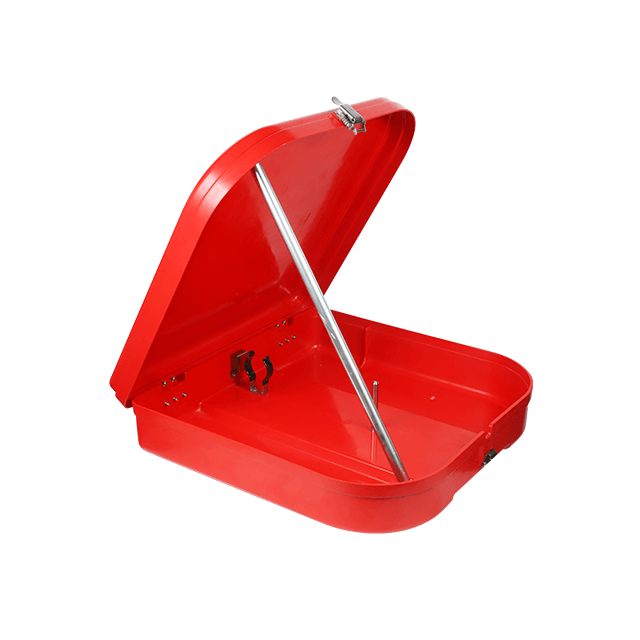
Engineers traditionally default to 316L stainless steel for corrosive environments. However, composites often present a mechanically superior choice. Understanding the exact differences helps procurement teams make better material selections.
Both materials offer excellent baseline protection against the elements. However, stainless steel relies on a thin, passive chromium oxide layer for protection. Heavy chloride exposure from coastal salt fog can break this layer down, causing microscopic pitting. This pitting slowly compromises stainless steel welds. FRP contains no metal, making it entirely immune to chloride-induced pitting.
Material procurement heavily influences project planning. FRP typically carries a notably lower raw material and fabrication cost than 316L stainless steel. Furthermore, the supply chain pricing for composites remains highly stable year over year. Metal commodity markets fluctuate aggressively based on global events, complicating long-term project budgeting.
Weight directly impacts installation logistics. FRP weighs roughly 25% to 30% as much as steel. This massive weight reduction eliminates the need for heavy-lifting equipment during installation. It also significantly lowers the static structural load on mounting brackets, walls, and utility poles.
Material conductivity changes how internal components behave. These functional differences often dictate the final specification:
| Feature | FRP (Fiberglass) | 316L Stainless Steel |
|---|---|---|
| Rust/Oxidation Risk | Impossible | Low (vulnerable at welds) |
| Weight Profile | Lightweight (25-30% of steel) | Heavy |
| RF Transparency | High (Radiolucent) | None (Faraday Cage) |
| Thermal Conductivity | Low (Insulator) | High (Conductor) |
You must evaluate composite products carefully. Not all units perform equally in the field. When specifying an FRP outdoor enclosure, review regulatory compliance, UV resistance methods, and hardware quality.
Never rely on subjective claims of weatherproofing. Verify exact NEMA and IP ratings. You want to see NEMA 4X and IP66 certifications. The "4X" designation specifically proves corrosion resistance and defense against directed water hose-downs. Ensure the manufacturer holds valid UL 50E compliance to guarantee environmental sealing.
Direct sunlight slowly degrades untreated polymers. Unprotected FRP undergoes "chalking." This process degrades the surface layer and causes glass fibers to bloom outward. You must evaluate how the manufacturer mitigates UV damage. Look for embedded UV inhibitors mixed directly into the resin. For extreme sun exposure, seek units finished with secondary automotive-grade UV-resistant gel coats or robust polyurethane painting.
An FRP enclosure is only as reliable as its weakest point. A rust-proof body means nothing if the hinges corrode and fail. Ensure all latches, hinges, and mounting feet consist of high-grade 304 or 316 stainless steel. Alternatively, specify heavy-duty non-metallic composite hardware.
Gaskets require equal attention. Avoid cheap neoprene. Gaskets should use poured-in-place polyurethane or high-quality silicone. These materials prevent compression set, ensuring the door maintains a watertight seal after years of opening and closing.
Even the best materials fail if installed incorrectly. Field teams must understand how to handle composites. Poor installation practices introduce vulnerabilities that bypass the material's natural defenses.
Installers almost always drill holes for conduit entry. Cutting into the housing exposes raw glass fibers to the surrounding environment. If left untreated, moisture wicks directly into these exposed fibers. Over time, the moisture causes the composite matrix to swell and eventually delaminate.
You must mitigate this risk through strict field protocols. Outline mandatory best practices for your installation teams. Require them to treat all cut edges and drilled holes with an appropriate liquid resin or a robust conformal sealant before installing bulkheads or conduit fittings.
Maintenance teams often flag legacy installations for replacement too early. You must educate buyers and inspectors about the difference between cosmetic and structural issues. Minor surface chalking on older units looks unsightly, but it rarely impacts the underlying mechanics. The unit remains functionally sound. Monitor chalking during annual inspections, but do not mistake a dull finish for a compromised barrier.
Field technicians frequently treat composites like solid steel. They over-torque mounting hardware and door clamps. Excessive pressure induces micro-cracking deep within the composite material. These invisible cracks allow moisture ingress. Always provide precise torque specifications to your field teams and enforce the use of calibrated torque wrenches during installation.
FRP does not serve as a universal replacement for all industrial metals. However, it stands as the empirically superior choice for highly specific, corrosive environments like water treatment, marine ports, chemical processing, and telecommunications. By eliminating the chemical possibility of rust, reducing structural weight, and allowing RF signals to pass freely, composites solve the most pressing challenges of outdoor infrastructure.
Before issuing your next purchase order, take proactive steps. Audit your current NEMA rating requirements to establish a performance baseline. Document the specific ambient chemical exposures present at your facility. Finally, request comprehensive material data sheets (MDS) from enclosure manufacturers to ensure their resin systems match your environmental threat matrix.
A: A high-quality enclosure properly formulated with embedded UV inhibitors easily lasts 15 to 25 years or more in direct sunlight. While the exterior surface finish may dull or lightly chalk over time, the underlying structural integrity and protective barrier remain completely intact.
A: Yes. If cosmetic chalking occurs, you can easily restore the finish. First, properly prep the surface by lightly sanding and cleaning away any loose particulate. Then, apply a high-quality, two-part aliphatic polyurethane paint to restore the appearance and add a new layer of UV defense.
A: No. High-quality thermoset FRP maintains excellent structural stability in extreme cold. Unlike many standard thermoplastics that turn brittle and shatter, thermoset composites retain their impact resistance and mechanical strength down to -40°F (-40°C), making them ideal for freezing environments.
