


Views: 0 Author: Site Editor Publish Time: 2026-09-10 Origin: Site


Guessing on structural components introduces significant operational risks. Under-speccing an installation leads to catastrophic structural failure and severe safety hazards. Conversely, over-speccing wastes valuable capital expenditure unnecessarily. Establishing exact dimensions requires balancing structural engineering realities rather than relying on arbitrary rules of thumb. You must account for unsupported span, load criteria, and environmental corrosivity to ensure long-term performance. We designed this guide to provide an evidence-based framework for facility managers, engineers, and procurement teams. You will learn how to evaluate your facility's unique parameters effectively. Furthermore, we will help you finalize the exact specifications for your required project.
Standard thickness represents a dangerous myth in commercial applications. Every project demands a unique calculation based on specific site realities. You cannot simply pull a generic number from a catalog. Structural integrity depends heavily on applied forces.
Engineers divide forces into two distinct categories. Dead loads represent continuous, unchanging weight. They include the total weight of the cover itself. They also include sustained snow accumulation over winter months. Permanently mounted equipment like mixers and aeration hardware add massive dead loads. Live loads fluctuate over time. Operator foot traffic represents a very common live load. Temporary maintenance equipment and sudden wind uplift forces also fall into this category. You must calculate both variables to avoid structural compromise.
Span width severely impacts your required thickness. An exponential relationship exists between these two variables. As the span increases, the required material stiffness increases dramatically. Deflection becomes a major structural risk over wide gaps. Engineers achieve necessary stiffness through increased panel thickness. They also utilize strategic structural ribbing underneath the panel. Bridging a 20-foot gap requires vastly different engineering than bridging a 5-foot trench.
Ultimate failure weight only tells part of the story. Deflection limits serve as the true metric of a properly sized structure. These limits ensure the material bends within safe, recoverable margins under load. Common engineering standards utilize L/120 or L/240 criteria. "L" represents the total span length. A smaller fraction means tighter deflection control. For instance, L/240 is far stiffer than L/120. Focusing on these deflection criteria ensures a safe, walkable surface. You can explore standard fiberglass cover configurations to see how deflection ratings influence initial design choices.
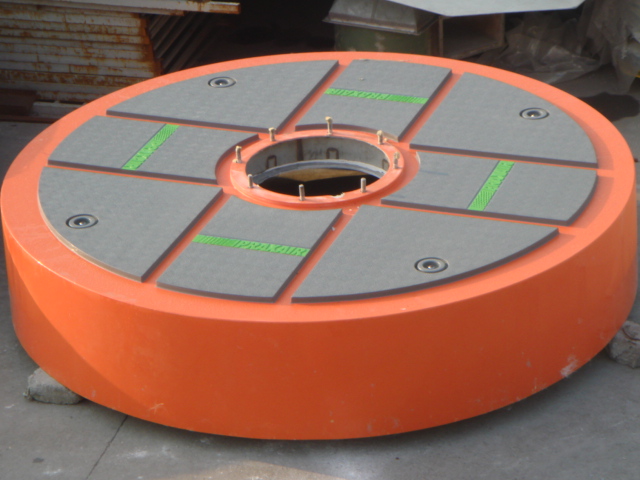
Different industries demand entirely different evaluation lenses for sizing. You must frame your specific use-case accurately before writing procurement specs. Municipal environments vary wildly from heavy industrial zones.
Municipal plants involve massive large-span requirements. Clarifiers, aeration tanks, and trickling filters stretch over wide areas. A highly engineered fiberglass water treatment cover requires precise sizing allowances. Odor control and dangerous gas containment remain top operational priorities. Achieving this requires specific edge overlaps and tight gasket seating dimensions. You must also incorporate modular sizing into the master plan. Modular sections allow quick access for pump removals. Maintenance teams can perform routine checks without uncovering the entire basin. This protects operators from excessive hydrogen sulfide exposure.
Trench environments face completely different physical pressures. Pedestrian and vehicular load ratings dictate the sizing logic here. Facilities occasionally require H-20 loading for heavy commercial trucks. However, fiberglass typically serves dedicated pedestrian traffic zones. Thickness requirements focus heavily on high impact resistance. High-traffic industrial zones expose covers to dropped metal tools. They also face dragging equipment and heavy rolling carts. A thicker top plate prevents localized puncturing in these aggressive zones.
The "equal thickness" fallacy misleads many buyers during procurement. A 1/4-inch thick panel from Manufacturer A rarely matches Manufacturer B. Structural integrity relies heavily on internal composite composition.
The structural fiberglass reinforcement dictates absolute tensile strength. Meanwhile, the liquid resin dictates chemical and environmental resistance. A perfectly balanced ratio prevents brittle structural failure. High glass content increases the overall load capacity. Conversely, too much resin makes the panel weak. It becomes highly prone to cracking under localized stress.
Chemical exposure determines your ideal resin type. Engineers typically select from three primary liquid resin categories.
Table 1: Common Resin Systems
| Resin Type | Corrosion Resistance Level | Typical Application Scenarios |
|---|---|---|
| Orthophthalic (Ortho) | Light to Moderate | Standard atmospheric exposure, mild chemicals, general architecture. |
| Isophthalic (Iso) | Moderate to High | Industrial wastewater, splash zones, general marine applications. |
| Vinyl Ester | Premium / Severe | Extreme chemical processing, high-acid environments, harsh caustics. |
Solid fiberglass laminates become impractically heavy over wide spans. Engineers utilize structural ribbing to solve this exact problem. They create sandwich panels to achieve required stiffness efficiently. This process involves incorporating balsa wood or rigid foam cores. They also use heavy-duty FRP structural beams inside the shell. This technique builds a deep structural profile rapidly. It maximizes panel rigidity without adding excessive dead weight. You can view various fiberglass cover specifications to see how core materials influence overall panel thickness.
Regulatory compliance ensures a permanently safe working environment. Installation realities dictate how well the cover actually fits the basin.
Evaluate your internal specifications against strict OSHA walkability standards. If a cover sustains routine foot traffic, it must comply. It must meet specific localized point-load requirements. Overall size does not exempt the panel from point-load testing. Operators must walk confidently without fear of sudden breakthrough.
Outdoor industrial applications face extremely harsh elements continuously. UV inhibitors and surfacing veils prevent rapid material degradation. Continuous UV exposure eventually causes severe "fiber bloom." This occurs when surface resin degrades entirely. It exposes raw white glass fibers to the elements. Micro-cracking follows shortly after this initial surface degradation. These issues cause a slight reduction in overall structural integrity. Proper surfacing veils mitigate this exact risk entirely.
Concrete basins rarely maintain perfect geometric shapes. Therefore, you must establish proper structural sizing deductions.
Tight fits cause severe panel buckling during hot summer months. Loose fits compromise odor control and allow dangerous gas leakage.
Moving from technical evaluation to procurement requires careful shortlisting logic. You need a highly capable manufacturing partner.
A credible fiberglass cover supplier offers more than standard product catalogs. They must provide detailed finite element analysis (FEA). They should calculate site-specific load distributions accurately. Reliable partners validate their geometry through rigorous structural modeling.
Avoid suppliers who force your project into standard catalog sizes. Facilities rarely match pre-made mold dimensions perfectly. Assess whether the manufacturer utilizes adaptable custom tooling. They should fabricate the cover to the exact dimensions of your infrastructure. Forced fits always lead to poor performance and installation delays.
Never rely on verbal assurances during the bidding process. Demand concrete proof points before finalizing any purchase order.
These strict requirements filter out unqualified vendors very quickly.
Determining the right thickness and size remains a rigorous engineering process. You must combine load requirements, span geometry, and environmental exposure accurately. Relying on generic sizing assumptions compromises operator safety and long-term performance.
Taking these intentional steps ensures your structural investments remain highly durable and fully compliant.
A: The solid top plate typically ranges from 1/4-inch to 1/2-inch thick. However, nominal surface thickness alone does not guarantee safe walkability. The true live load capacity depends heavily on the underlying structural ribbing and the unsupported span length beneath the plate.
A: Arched covers or heavy-duty pultruded structural profiles can bridge substantial gaps effectively. Depending on the custom engineering and specific load requirements, high-strength composite designs can span 30 to 100+ feet without requiring any underwater structural columns.
A: No. Chemical resistance is dictated solely by the specific resin system used and the exterior corrosion barrier veil. Increasing structural thickness adds load capacity but does not stop harsh chemicals from degrading an incompatible resin.
A: As a general rule of thumb, solid fiberglass weighs a specific amount per square foot based on thickness. A structural engineer uses detailed laminate schedules to provide precise weights. Ultimately, fiberglass offers a distinct weight advantage over solid steel or concrete.
